
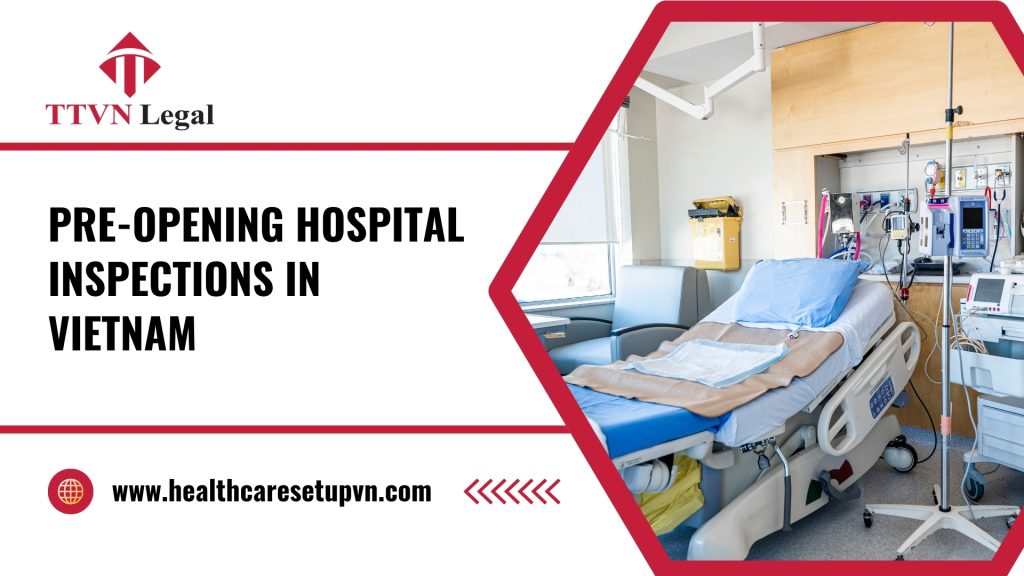
Before a healthcare facility can begin treating patients, it must undergo a series of regulatory inspections conducted by competent authorities. These inspections are a crucial step in the hospital licensing process and are designed to verify that the facility meets all legal, technical, and operational requirements established by Vietnamese law. Hospital inspection Vietnam procedures therefore play a decisive role in determining whether a newly established hospital can officially begin operations.
For investors planning to open hospital in Vietnam, preparing for regulatory inspections is one of the final but most important stages of the hospital setup process. Even if a hospital has completed construction, recruited medical staff, and installed medical equipment, authorities must still verify compliance with applicable healthcare regulations before granting final operating approval.
The inspection process is governed by Vietnam’s healthcare regulatory framework, particularly the Law on Medical Examination and Treatment 2023 and the oversight authority of the Ministry of Health Vietnam. These legal foundations define how healthcare facilities are evaluated before they are allowed to provide medical examination and treatment services.
Understanding hospital inspection Vietnam procedures allows healthcare investors to anticipate regulatory expectations and ensure that their facilities are fully prepared before the inspection takes place.
Purpose of pre-operational inspections
Pre-opening inspections serve as the final verification step before a hospital receives permission to operate.
Regulators conduct hospital inspection Vietnam reviews to confirm that the hospital complies with the conditions described in its licensing application. This includes verifying the accuracy of submitted documents as well as assessing the hospital’s physical infrastructure and operational readiness.
Authorities typically examine whether the hospital building matches approved construction plans, whether medical equipment has been installed properly, and whether staffing structures comply with healthcare regulations.
For organizations preparing to open hospital in Vietnam, these inspections confirm that the hospital is capable of delivering safe medical services and protecting patient welfare.
Authorities responsible for inspections
Hospital inspection Vietnam procedures are typically conducted by healthcare authorities at the provincial or national level, depending on the classification and scale of the hospital.
Inspection teams often include representatives from health departments, technical specialists, and regulatory officials responsible for healthcare supervision.
These inspectors review documentation, examine facilities, and verify compliance with national healthcare standards before approving the hospital’s operational license.
Hospitals planning to open hospital in Vietnam must cooperate fully with inspection teams and provide access to all relevant documentation and facilities.
The inspection process is generally conducted through formal evaluation sessions scheduled after the hospital submits its application for an operating license.
Infrastructure and facility verification
One of the most visible components of hospital inspection Vietnam reviews involves physical inspection of the hospital building.
Inspectors verify that the hospital’s infrastructure meets approved construction standards and complies with healthcare facility regulations. This includes reviewing patient wards, treatment rooms, operating theaters, diagnostic departments, and emergency areas.
Authorities may also assess ventilation systems, sanitation facilities, patient access routes, and safety features designed to protect patients and staff.
Hospitals that plan to open hospital in Vietnam must ensure that all construction and fit-out work aligns with previously approved plans submitted during the licensing process.
Any inconsistencies between approved designs and the completed facility may delay licensing approval.
Medical equipment and technical systems
Medical equipment is another key focus of hospital inspection Vietnam procedures.
Inspectors review whether the hospital has installed the equipment necessary to support the medical services listed in its licensing application. They may verify diagnostic machines, surgical equipment, laboratory systems, and patient monitoring technologies.
Authorities also evaluate whether equipment has been properly calibrated and whether maintenance systems are in place to ensure safe operation.
For hospitals seeking to open hospital in Vietnam, demonstrating that medical equipment meets technical standards is essential to obtaining operational approval.
Hospitals must also maintain documentation related to equipment procurement, certification, and installation.
Review of medical staffing and qualifications
Hospital inspections also examine whether the facility has recruited a sufficient number of qualified medical professionals.
Inspectors review employment records, professional licenses, and staff assignments to ensure that the hospital meets staffing requirements under healthcare regulations.
Hospital inspection Vietnam procedures verify that physicians, nurses, technicians, and other healthcare workers possess the appropriate qualifications to perform their assigned duties.
Authorities may also confirm that medical professionals have valid practice certificates and that staffing levels correspond with the hospital’s clinical departments.
Hospitals preparing to open hospital in Vietnam must therefore ensure that all personnel documentation is organized and available for inspection.
Clinical procedures and operational readiness
Regulatory inspections do not only focus on physical infrastructure. Authorities also assess whether the hospital has established operational systems capable of supporting safe medical practice.
Inspection teams may review internal procedures governing patient admission, treatment protocols, infection control measures, and medical record management.
Hospitals must demonstrate that they have developed clear operational policies to guide healthcare staff and protect patient safety.
Hospital inspection Vietnam evaluations therefore examine both physical readiness and administrative readiness before approving the hospital’s opening.
Hospitals that open hospital in Vietnam must ensure that operational procedures are documented and communicated to staff prior to the inspection stage.
Safety compliance and emergency preparedness
Safety compliance is another major component of the inspection process.
Hospitals must demonstrate that emergency response systems are in place, including fire safety equipment, evacuation procedures, and disaster response protocols.
Authorities conducting hospital inspection Vietnam reviews may evaluate whether hospitals have installed safety equipment, emergency alarms, and evacuation signage.
Hospitals must also demonstrate that staff members are trained to respond appropriately to medical emergencies and facility-related incidents.
For organizations preparing to open hospital in Vietnam, integrating safety management systems into hospital operations is critical for successful inspection outcomes.
Documentation and licensing records
In addition to inspecting physical facilities, regulatory teams carefully examine the documentation submitted by the hospital.
This documentation may include licensing applications, staffing records, equipment lists, construction approvals, and other regulatory permits required for hospital operations.
Hospital inspection Vietnam procedures ensure that the information provided during the licensing application process accurately reflects the hospital’s actual operations.
Hospitals that open hospital in Vietnam must maintain organized records so that inspectors can easily review the documentation during the evaluation process.
Incomplete or inconsistent documentation may delay licensing approval.
Outcomes of the inspection process
After completing the inspection, the regulatory team prepares an evaluation report describing the hospital’s level of compliance with healthcare regulations.
If the hospital meets all required conditions, authorities may proceed with issuing the hospital’s operating license.
If deficiencies are identified, the hospital may be required to address those issues before receiving final approval.
Hospital inspection Vietnam processes therefore function not only as compliance checks but also as quality assurance mechanisms ensuring that healthcare facilities meet national safety and operational standards.
Hospitals planning to open hospital in Vietnam should treat inspections as an opportunity to demonstrate their readiness to deliver safe and professional medical services.
Preparing effectively for inspections
Successful inspection outcomes depend heavily on preparation.
Hospitals should conduct internal compliance reviews before submitting their licensing applications. These internal assessments help identify potential issues related to infrastructure, staffing, documentation, or operational procedures.
Many healthcare investors work with legal advisors and regulatory consultants to ensure that the hospital meets all inspection requirements.
Hospitals that open hospital in Vietnam and conduct comprehensive pre-inspection audits often experience smoother regulatory approvals because potential compliance gaps are resolved in advance.
Preparation reduces uncertainty and helps hospitals demonstrate professionalism during regulatory evaluations.
Strategic importance for hospital investors
Pre-opening inspections represent the final checkpoint in the hospital licensing journey. For healthcare investors, passing these inspections confirms that the hospital has successfully navigated the complex regulatory environment governing medical services in Vietnam.
Hospital inspection Vietnam procedures ensure that healthcare facilities operate according to national standards designed to protect patient safety and maintain public trust in the healthcare system.
For organizations seeking to open hospital in Vietnam, approaching inspections with careful preparation, transparent documentation, and strong compliance systems significantly increases the likelihood of receiving timely licensing approval.
Hospitals that successfully complete the inspection process can proceed confidently into operational stages, providing medical services while maintaining full alignment with Vietnamese healthcare regulations.