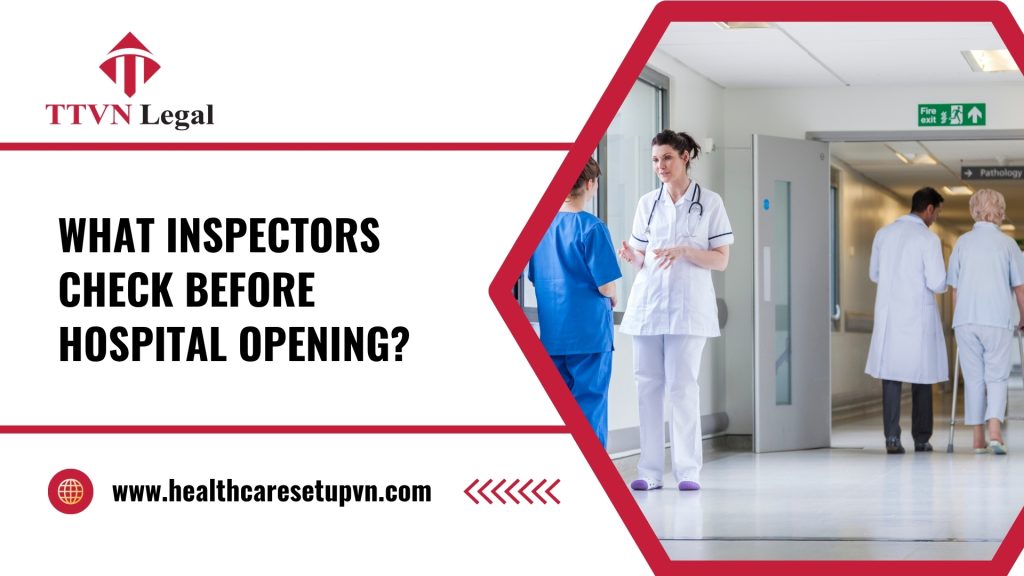
Before a healthcare facility is allowed to begin treating patients, regulatory authorities must confirm that it satisfies all legal and operational requirements under Vietnamese healthcare law. This confirmation occurs through formal inspections conducted prior to the issuance of a hospital operating license. The evaluation process typically follows a structured hospital inspection checklist used by regulators to assess whether the facility meets national standards for infrastructure, staffing, equipment, and patient safety.
For investors preparing to open hospital in Vietnam, understanding what inspectors examine during these evaluations is essential. Hospitals that anticipate inspection criteria early in the project development stage are significantly more likely to pass regulatory reviews without delays.
Pre-operational inspections are conducted within the legal framework established by the Law on Medical Examination and Treatment 2023 and supervised by the Ministry of Health Vietnam along with provincial health authorities. These agencies apply a standardized hospital inspection checklist to ensure that newly established healthcare facilities comply with Vietnamese healthcare regulations before granting permission to operate.
Verification of legal documentation
The first stage of the inspection typically focuses on documentation review. Inspectors confirm that the hospital’s licensing application accurately reflects the facility that has been constructed and prepared for operation.
Authorities examine documentation related to the hospital’s establishment approval, construction permits, equipment procurement records, and personnel qualifications.
The hospital inspection checklist also includes verification of regulatory approvals obtained from relevant authorities, such as fire safety certification, environmental compliance documentation, and technical approvals for specialized medical equipment.
For organizations planning to open hospital in Vietnam, maintaining complete and organized documentation is essential. Inconsistent or incomplete records can delay the licensing process even if the physical hospital infrastructure is fully prepared.
Physical infrastructure and facility layout
A major component of the hospital inspection checklist involves evaluating the physical condition and layout of the healthcare facility.
Inspectors verify that the hospital building matches the construction plans submitted during the licensing process. They review treatment areas, patient wards, surgical rooms, emergency departments, diagnostic laboratories, and administrative areas.
The inspection team also evaluates circulation systems within the hospital, including patient flow, emergency access routes, and separation of sterile and non-sterile areas.
Hospitals preparing to open hospital in Vietnam must ensure that all departments are fully constructed and properly equipped before the inspection takes place.
In some cases, inspectors may measure room sizes or verify the functional design of clinical departments to ensure compliance with healthcare facility standards.
Medical equipment installation and readiness
The hospital inspection checklist includes a detailed review of medical equipment and diagnostic systems.
Inspectors confirm that the equipment listed in the licensing application has been properly installed and is ready for clinical use. They may examine imaging devices, surgical instruments, laboratory machines, and patient monitoring systems.
Hospitals must also demonstrate that the equipment meets relevant technical standards and that maintenance procedures have been established.
Documentation related to equipment procurement, installation, and technical certification may be requested during the inspection.
For healthcare investors who plan to open hospital in Vietnam, ensuring that equipment is fully operational before the inspection stage is a critical preparation step.
Staffing structure and professional qualifications
Human resources represent another key area evaluated through the hospital inspection checklist.
Inspectors verify that the hospital has recruited an adequate number of qualified medical professionals for each clinical department. This includes physicians, nurses, technicians, pharmacists, and other healthcare personnel.
Authorities review professional licenses, employment contracts, and staff assignment records to confirm that medical professionals meet legal qualification requirements.
Hospitals that open hospital in Vietnam must demonstrate that staffing structures align with the scope of medical services the hospital intends to provide.
The inspection may also verify that department leaders and specialized medical staff possess appropriate professional experience.
Operational procedures and clinical protocols
In addition to reviewing physical facilities and personnel, inspectors evaluate whether the hospital has developed internal procedures necessary for safe medical operations.
Hospitals must establish policies governing patient admission, clinical treatment processes, infection control measures, and medical record management.
These operational systems form an important component of the hospital inspection checklist because they demonstrate that the hospital can deliver consistent and safe healthcare services.
Hospitals preparing to open hospital in Vietnam should therefore develop written operational protocols before the inspection stage.
Clear documentation of internal procedures helps inspectors verify that the hospital is prepared to manage patient care responsibly.
Infection control systems
Infection prevention is a central concern in hospital operations. As a result, infection control infrastructure and procedures are included in the hospital inspection checklist.
Inspectors may examine sterilization areas, medical waste management systems, isolation rooms, and sanitation practices within clinical departments.
Hospitals must demonstrate that they have implemented infection prevention programs that protect both patients and healthcare staff.
Healthcare facilities seeking to open hospital in Vietnam must also ensure that infection control policies are clearly communicated to medical personnel.
Strong infection control systems are considered a fundamental requirement for hospital operations.
Emergency preparedness and safety systems
Emergency preparedness is another key element inspectors review before approving a hospital to begin operations.
Hospitals must demonstrate the existence of emergency response plans designed to address situations such as medical emergencies, fire incidents, or technical failures within the facility.
The hospital inspection checklist may include evaluation of fire safety equipment, alarm systems, evacuation plans, and emergency medical response protocols.
Inspectors may also verify that hospital staff have received training related to emergency response procedures.
Hospitals that open hospital in Vietnam must therefore integrate safety management systems into their operational framework before requesting inspection.
Medical record and data management systems
Accurate documentation of patient care is an essential component of healthcare compliance.
During the inspection process, authorities may review the hospital’s system for maintaining patient records and clinical documentation.
Hospitals must demonstrate that they have established reliable methods for recording diagnoses, treatment plans, prescriptions, and clinical outcomes.
The hospital inspection checklist may include verification that patient data is stored securely and can be accessed by authorized medical staff when necessary.
Hospitals preparing to open hospital in Vietnam should ensure that their medical record management systems meet both professional standards and regulatory expectations.
Compliance with specialized regulatory approvals
In certain cases, hospitals may require additional regulatory approvals depending on the services they intend to provide.
For example, departments that operate radiation-based diagnostic equipment must comply with radiation safety regulations and obtain appropriate licenses.
Hospitals must demonstrate that these specialized approvals have been obtained before the inspection process.
Inspectors may verify documentation related to radiation safety, environmental protection, and technical operation of specialized equipment.
Hospitals seeking to open hospital in Vietnam must ensure that all relevant regulatory approvals are completed before scheduling the final inspection.
Final evaluation and inspection results
After reviewing documentation, facilities, staffing, and operational systems, the inspection team prepares an official report summarizing its findings.
If the hospital meets the requirements outlined in the hospital inspection checklist, the regulatory authority may proceed with issuing the hospital’s operating license.
If certain deficiencies are identified, the hospital may be required to correct those issues before approval is granted.
For organizations planning to open hospital in Vietnam, the inspection process serves as the final regulatory checkpoint confirming that the hospital is prepared to provide medical services in compliance with Vietnamese healthcare law.
Strategic preparation for successful inspections
Hospitals that approach inspections proactively tend to achieve smoother licensing outcomes.
Many healthcare investors conduct internal audits or compliance reviews prior to requesting formal inspections. These internal evaluations help identify potential regulatory gaps and allow hospitals to address them in advance.
Hospitals planning to open hospital in Vietnam often work with regulatory consultants or legal advisors who specialize in healthcare licensing to ensure that all elements of the hospital inspection checklist are satisfied.
Careful preparation not only increases the likelihood of inspection success but also helps hospitals establish strong operational systems from the beginning.
Closing observations
Pre-opening inspections represent a critical stage in Vietnam’s hospital licensing framework. Through a structured hospital inspection checklist, regulators evaluate whether new healthcare facilities meet national standards for infrastructure, staffing, equipment, and patient safety.
For healthcare investors aiming to open hospital in Vietnam, understanding inspection criteria allows project teams to prepare facilities and operational systems that align with regulatory expectations.
Hospitals that successfully complete this inspection process demonstrate that they are capable of delivering safe, professional medical services while maintaining full compliance with Vietnamese healthcare regulations.